Capacity Building
Capacity building in HCD, design, agile, and accessibility
Year: 2020 – 2025
Sector: Federal government
Sector: Federal government
Background
With federal programs delivering increasingly complex products and solutions for the american people, there was a need to expand trainings and capacity building programs to build skills in agile methods, product management, human-centered design, accessibility, service design, and other aspects of technology delivery.
Approach
During my tenure in the federal government, I created, managed, and delivered in-person and online capacity building trainings, coaching, as well as project-based support to over 1000 federal employees from agencies including: NASA, VA, CDC, USAID, Army, Navy, DHS, and GSA. As much as possible, I tried to embed the capacity building content within the context of the partner’s work to help explain the why and how behind concepts, methods, and approaches.
Workshop
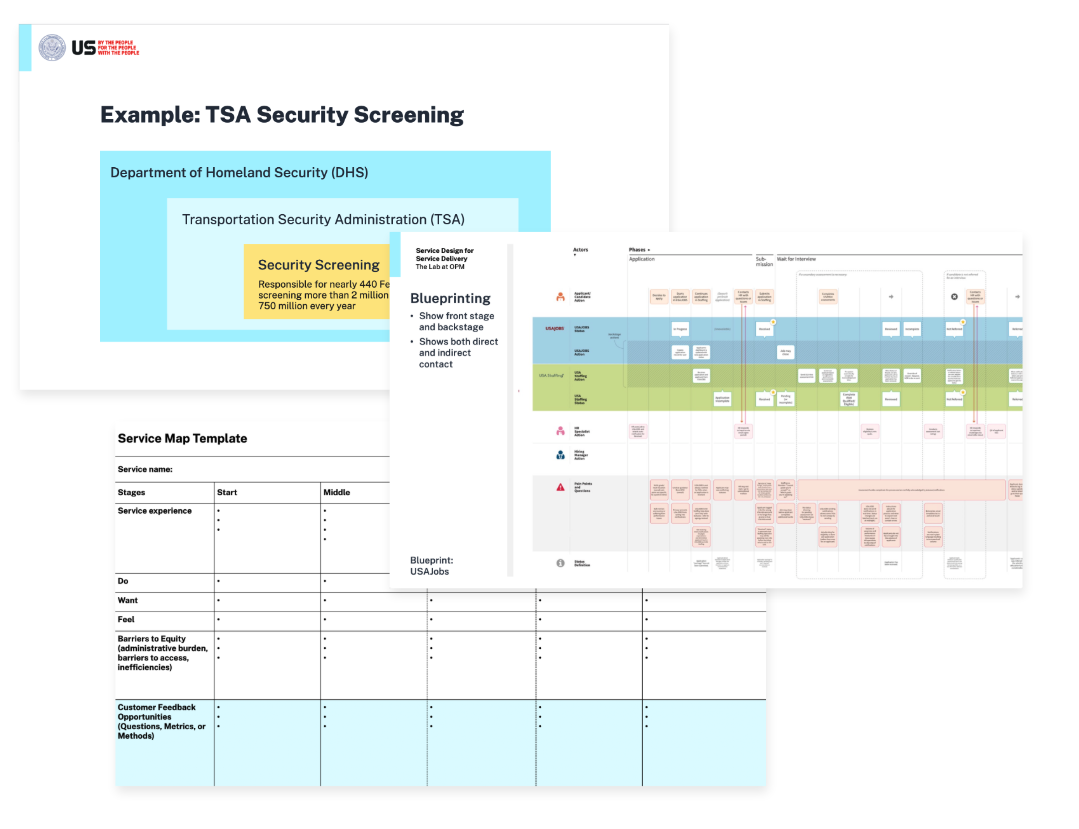
Service Definition
To support federal agencies in defining their programs and services using service design good practices, we created a reusable service definition workshop and worksheet. The initial delivery was with over 30 federal agencies, focused on breaking down service design concepts like backstage and frontstage, role dependencies, customer experience, and how service design tools can help to make decisions within program teams. Participants produced draft service blueprints as a workshop output.
Workshop
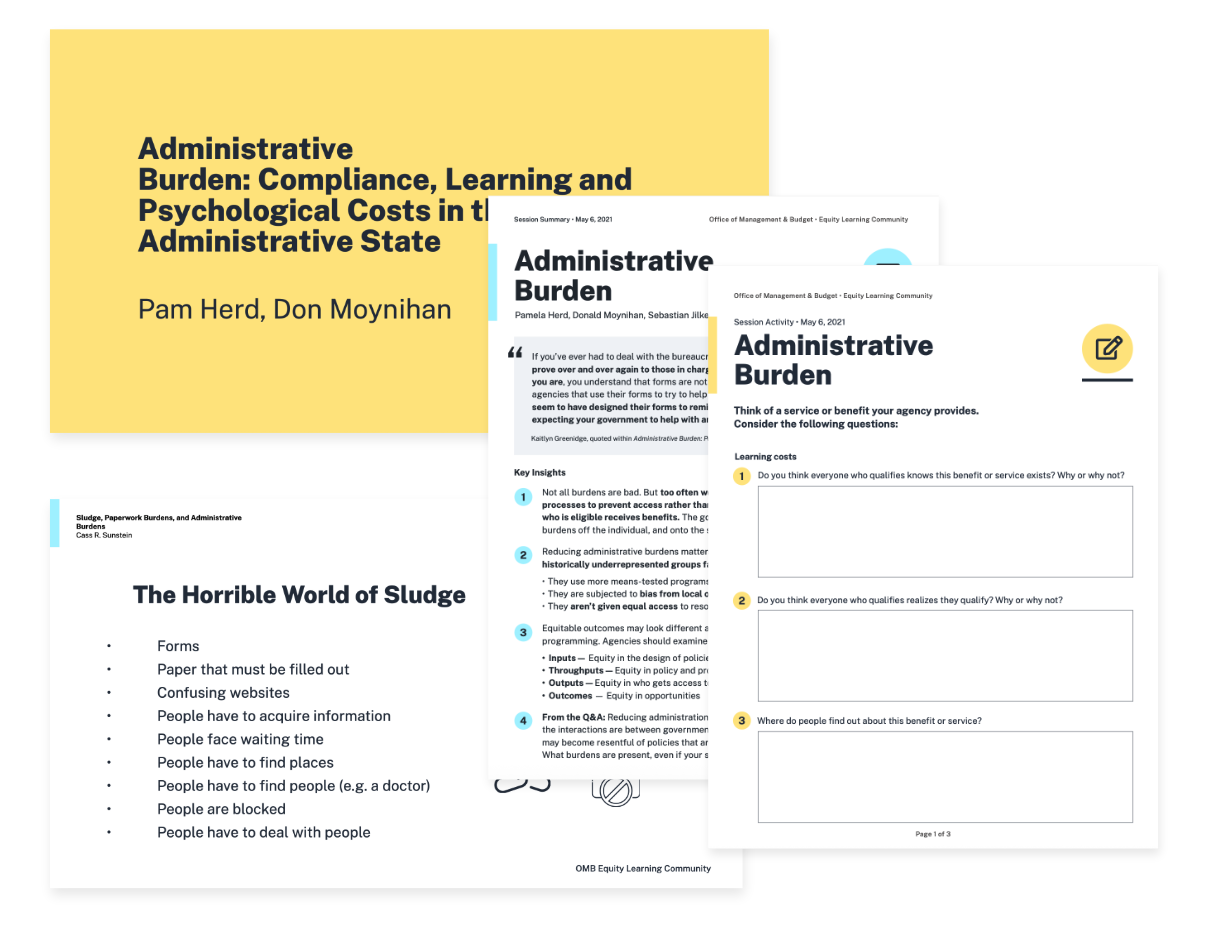
Administrative Burdens
In partnership with administrative burden experts and OMB staff as part of the implementation of a number of executive orders, I supported a team to design and deliver a custom workshop and frameworks for government employees to use when assessing administrative burdens within their programs and services. The workshop included practical examples of administrative burdens in the federal government, how to break down administrative burdens into learning, compliance, and psychological costs, and how to offset administrative burdens from the beneficiaries and onto more efficient avenues.
Training
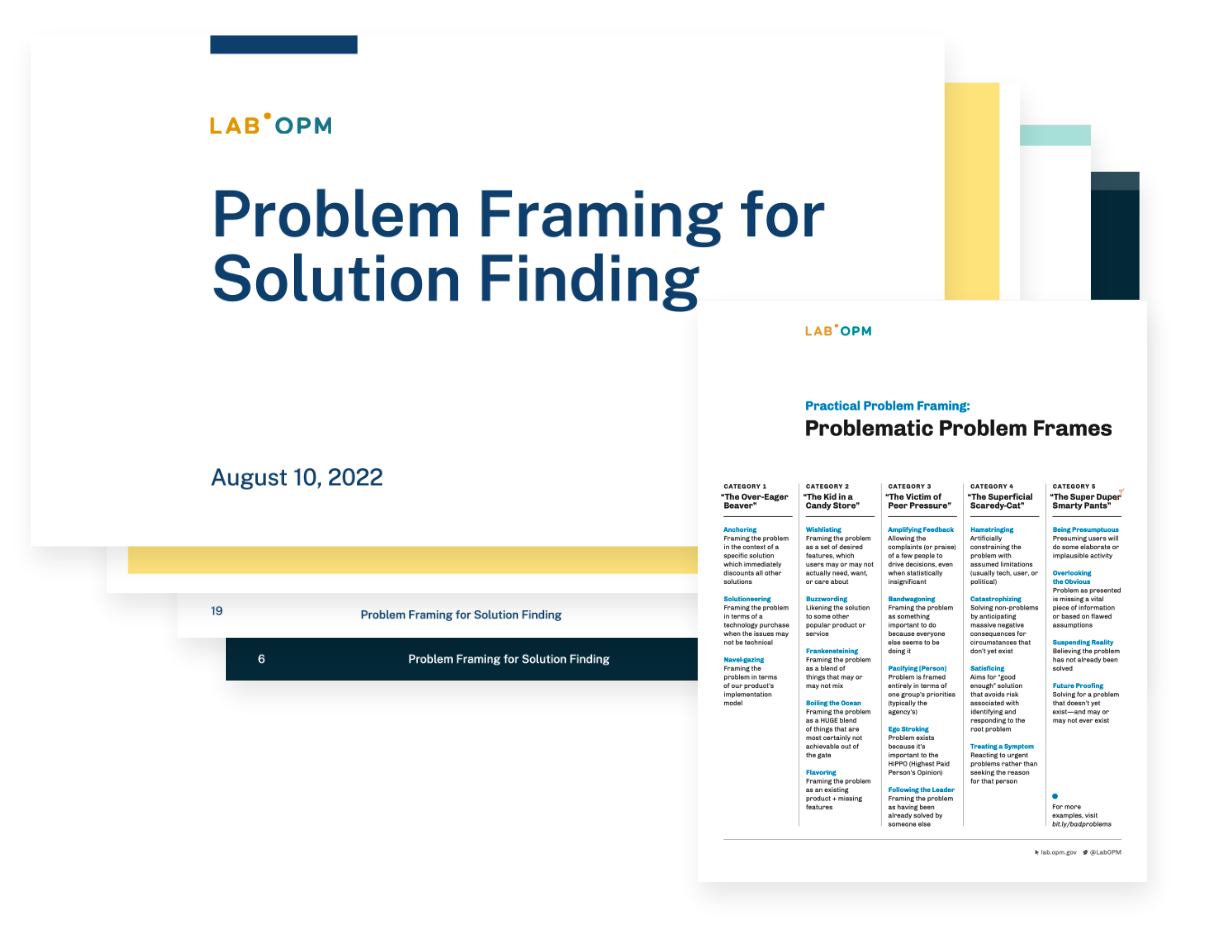
Problem Framing
This one-day course introduced Problem Framing as a key design skill that helps uncover the core needs and opportunities behind defining challenges, enabling more innovative solutions. Participants engaged with practical examples and exercises to develop their ability to craft, communicate, and reframe problems from new perspectives.
Training
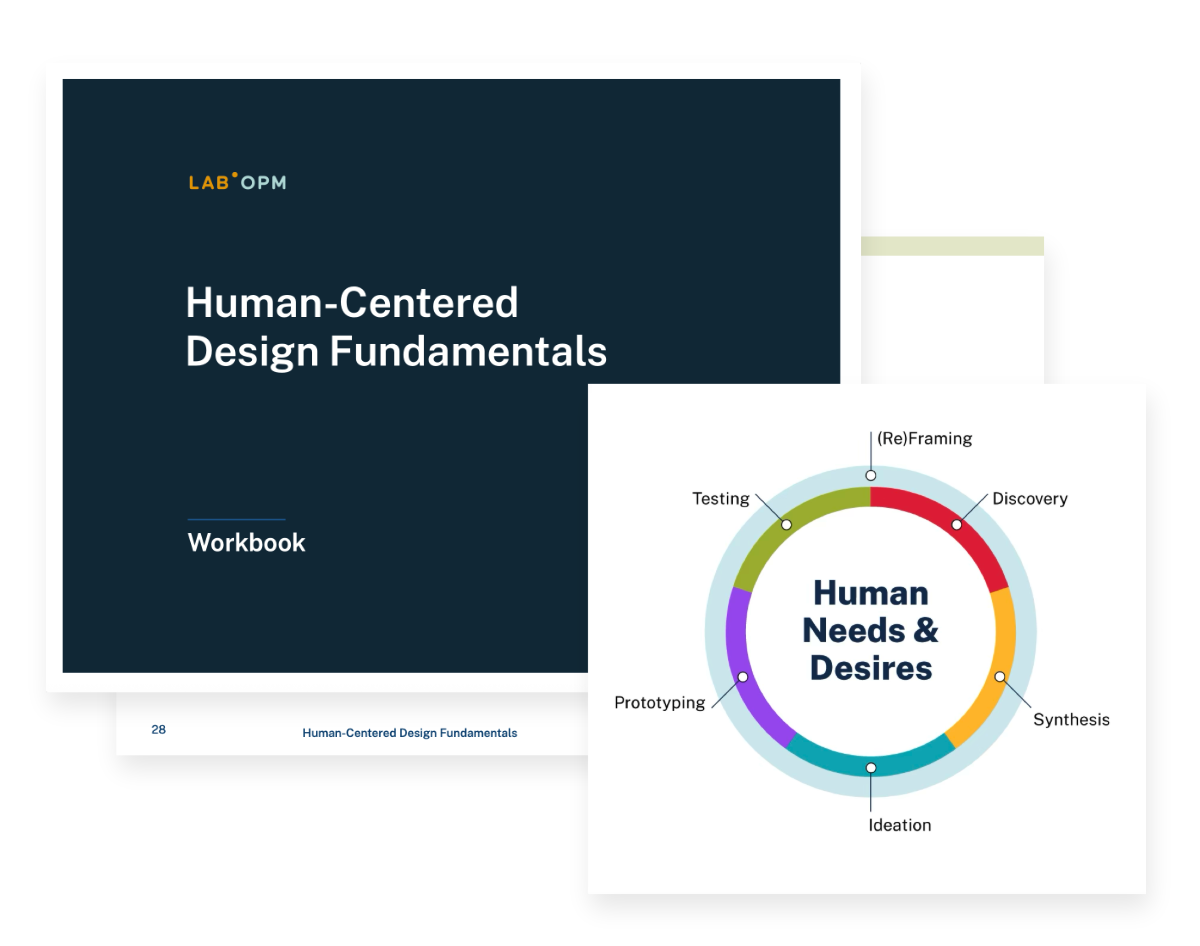
Intro to Human-centered Design
The multi-day course introduces Human-Centered Design, a creative, people-focused approach that uncovers root causes and develops impactful solutions through rapid prototyping and testing. Participants engaged in hands-on activities to practice framing problems, discovering insights, ideating, and synthesizing solutions in a fast-paced, project-based environment.
Training
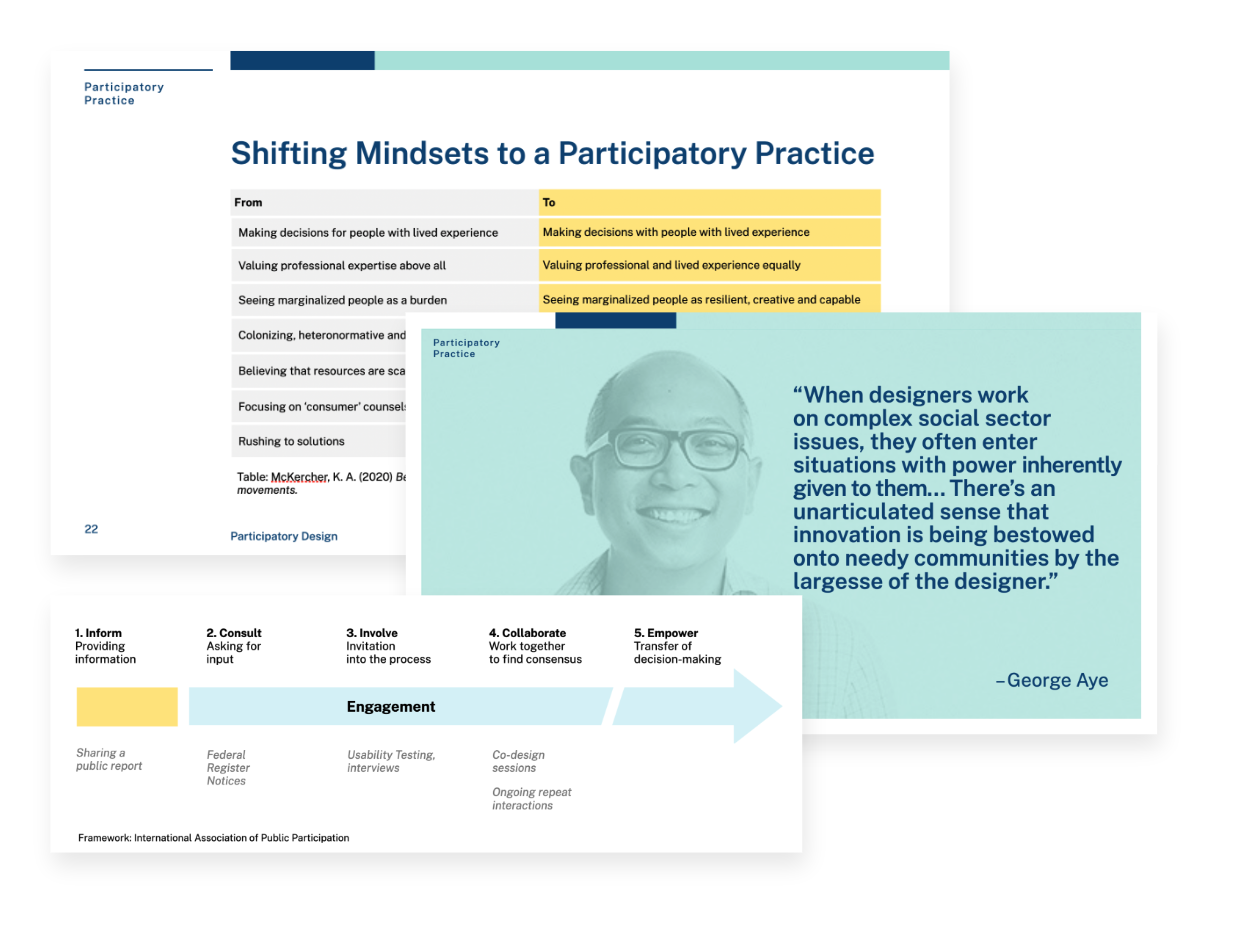
Participatory Practice
This course explores the principles of participatory practice, helping participants think critically about when and how to invite meaningful participation into their processes. Through hands-on experimentation with tools and frameworks, participants discovered how to foster successful collaboration and apply participatory design methods in government work.
Training
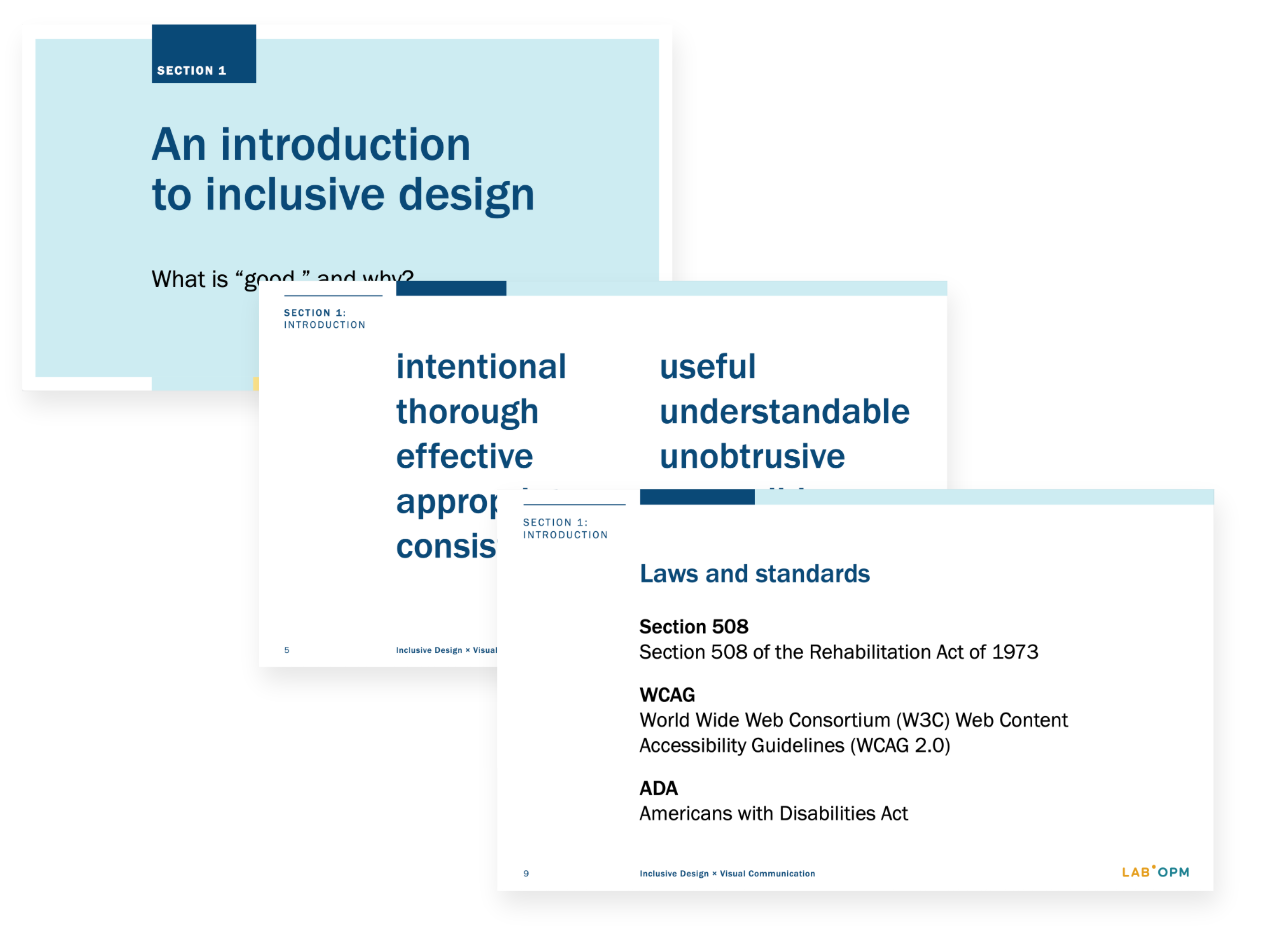
Inclusive Design
I supported the delivery of the inclusive design course. The course introduced the principles of inclusive design and accessibility, empowering participants to create products and services that are usable by everyone, including people with diverse abilities. The course covered definitions, policies, and practical tutorials on setting up accessible documents, and using web-based accessibility checkers.